Loading...
The return of nice weather often signals a wardrobe change to lighter outfits, offering the chance to reveal a bit more skin.
Whether it’s an elegant dress, a pretty top, or a charming skirt, these pieces highlight not only your silhouette but also your skin.
This brings us to a crucial point: exposed skin must be flawless, so well hair-free.
For transgender women or travestis, removing body hair is an essential step to feel fully feminine.
After all, nothing compares to the sensation of soft, silky skin to enhance femininity.
Although facial hair removal, including MTF beard removal, receives a lot of attention, it is just as important to take care of hair on the rest of the body.
From legs to armpits, through the chest and bikini area, many zones require special attention, which can be quite complex.
In this blog post, I share seven masculine to feminine body hair removal methods, highlighting their advantages and disadvantages.
Let’s take notes.

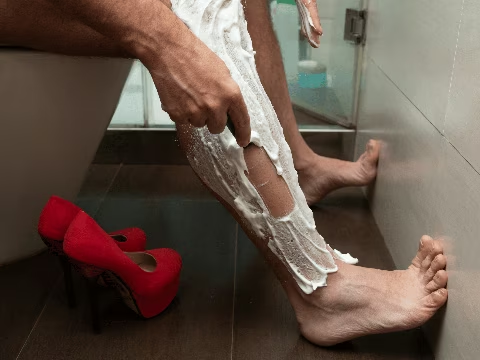
Shaving is a simple and affordable method to remove body hair that can be done quickly and easily at home.
Whether you use a manual or electric razor, it can be done on almost any part of the body.
• Quick and easy method
• Inexpensive compared to other hair removal techniques
• Can be done in the comfort of your home (you definitely have the tools at hand)
• Risk of cuts, razor burns, ingrown hairs
• Hair regrowth can be fast and feel rough or prickly – very uncomfortable
• Requires frequent maintenance to keep skin smooth
Waxing is a popular method. It works by applying hot or warm wax on the skin then quickly removing it, pulling out unwanted hair with it.
You can either visit a salon for professional waxing (which I recommend), or try doing it yourself at home.
If it’s your first time using a home waxing kit, it may take several attempts to get optimal results. (Yes, it’s sticky and very sticky indeed)
• Results last longer than shaving
• Hair regrowth is slower and can be finer
• Can be done on large areas of the body
• Can be painful, especially for sensitive skin
• Can be costly, especially if done in a salon. Yes, my dears, we suffer (a bit) to be beautiful
• Hair needs to reach a certain length before waxing
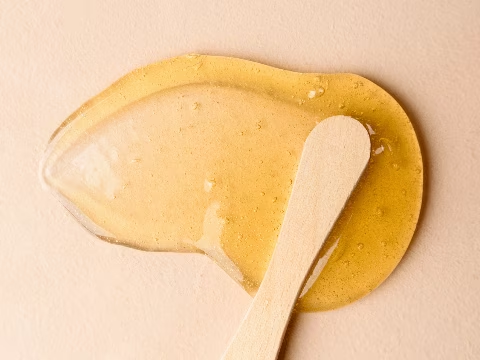
Sugaring is an ancient Egyptian hair removal method that uses a sugar gel or paste made from natural ingredients such as sugar, water, and lemon juice.
The sugar paste is applied to the skin and then quickly removed with a sweeping motion, ripping hair out from the follicles.
• Can be less painful than waxing
• Made from natural ingredients
• Results last longer than shaving
• Can be messy, very sticky. Can be hard to find a salon offering sugaring
• Hair needs to reach a certain length before sugaring
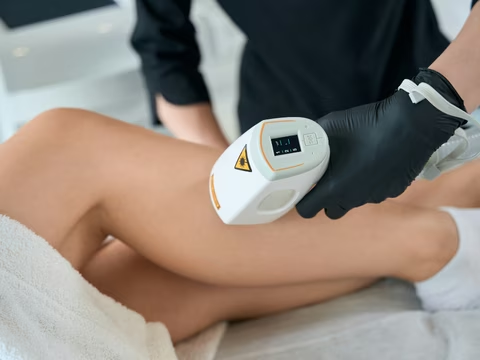
Laser hair removal is popular for facial hair removal for transgender people, but it can also be used on larger areas such as armpits, back, legs, and bikini area.
The procedure uses pulsed light beams to target and damage hair follicles, inhibiting future hair regrowth.
• Results are long-lasting
• Less painful than waxing or sugaring
• Can be done on large areas of the body
• Can be expensive
• Multiple sessions are necessary for optimal results
• Not effective on all hair types and skin tones (especially light hair and dark skin)
Of course, no question of wielding a lightsaber, this treatment is performed by a healthcare professional.
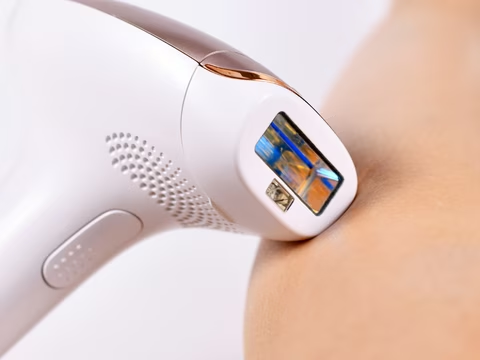
IPL hair removal is similar to laser hair removal, but it uses a different type of light. Instead of a concentrated laser beam, IPL uses a broader spectrum of light that is less focused.
Because of this, IPL can cover a larger treatment area but requires more sessions since the light is less powerful.
• Faster than laser hair removal because it covers a wider area
• Good availability of home devices
• Generally less painful than laser hair removal
• Requires more sessions compared to laser hair removal
• Increased risk of irritation due to the wider spectrum of light used... and it heats up a bit
• Can only be used on light skin tones / dark hair
And don’t forget to wear protective goggles!
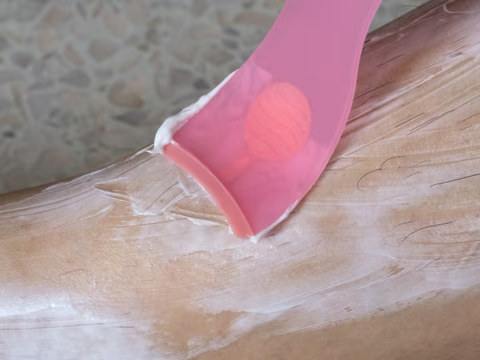
Depilatory creams use chemical compounds to break down hair proteins and remove unwanted hair.
These creams are applied to the skin and left on for a short period before being wiped or washed off, taking the hair with them.
• Can be done at home
• Quick and easy hair removal method
• Hair regrowth is slower than shaving
• Chemicals in the cream can cause skin irritation
• Results may not last as long as other hair removal methods
• Strong, sometimes unpleasant odor... choose quality!
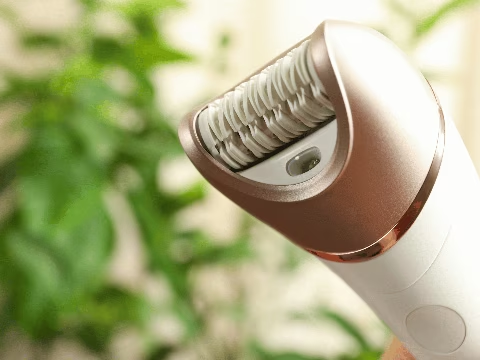
An epilator is an electronic device used to remove hair from the skin. It works by using a series of small pincers or rotating discs to pull hair out from the roots.
• Results last longer than shaving
• Hair regrowth is slower and can be finer
• Can be done in the comfort of your own home
Can be painful, especially for people with sensitive skin
Hair needs to have a certain length before using an epilator
Can be time-consuming, especially for large body areas
You may wonder why electrolysis was not included in this list of body hair removal methods for transgender people.
Although electrolysis is the only method offering permanent hair removal, it falls under the medical domain in France.
Electrolysis is highly recommended for beard removal. To learn more, you can consult a specialized doctor.
As you can see, there are many MTF body hair removal methods that can help you achieve smooth, feminine skin.
I encourage you to experiment and find the best method for YOU!
Now all you have to do is take action to enjoy the first rays of real sunshine.
Don’t forget to moisturize your skin and do a light exfoliation and you will be PERFECT!
Jennifer
PS: I can recommend a doctor friend if you want to know more, re-read my article on the subject with Christime MAGNIER

Accessories that feminize!
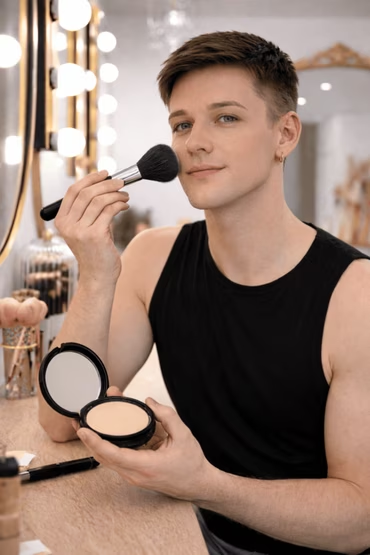
Hide your beard in 5 steps
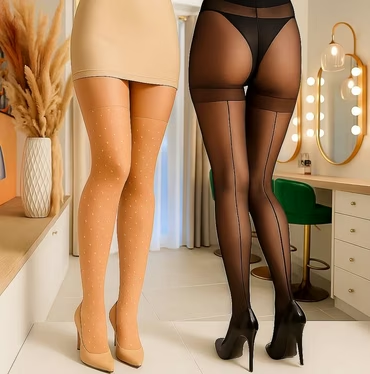
The secret weapon for dressing in full femininity
The purge

6 tips to avoid costly mistakes

5 steps for smooth and radiant skin

Transbeauté’s tips


Overcoming masculine hairiness for a feminine face

6 tips

Taking care of your winter look
Aucun commentaire pour l'instant.